
You Still Need a Human in the Loop
November 18, 2026The past year has been stressful and anxiety inducing for swaths of digital workers. Designers, developers, QA testers and project managers have all heard in no uncertain terms from the AI kingpins that AI will take their jobs. I will readily admit that I also felt that anxiety. The promise of AI and the excitement surrounding it started to feel less like a Mardi Gras parade of technical wonder and more like a hammer pounding a nail into the coffin containing my career and professional aspirations. Each news cycle had another expert or industry titan touting the mass changes and layoffs that were inevitable.
I watched online as the debate raged about AI's true impact. I doom scrolled as people posted on social media about being another casualty of AI induced layoffs. I watched with excitement as the AI companies rolled out bigger, better, smarter models. I lay awake at night wondering what all this meant for my career and my ability to provide for my family. And then I started to see clearly.
During the summer and fall of 2025 I went from sipping the AI Kool-Aid to taking gulps. By December with the release of Opus 4.5 I was asking the digital bartender for a refill. Curiosity replaced caution as I started down the path trodden by the digital masses to see what AI could do, or more accurately, what I could do with AI. What started as small experiments and inquisitive coding excursions turned into days-long journeys of AI-assisted coding. As the winter snow turned into spring flowers my decades-long ritual of sitting and coding by hand had been replaced by the fantastical hum of what I liken to a workshop full of digital power tools. I no longer needed to think through each function and painstakingly type each line, I was transforming into an AI augmented developer.
All the doom and gloom that surrounded AI was being counterbalanced by this unbelievable ability to think and type and talk about a problem and then have it magically fixed. I felt like I was straddling a chasm, AI on one side and the old way on the other. And then David Heinemeier Hansson (DHH) stated during his keynote at Rails World "I have retired from being a professional programmer". That was the moment for me, the moment I realized the chasm could not be straddled. AI had irrevocably changed how development would be done and I needed to get on that ship.
The fog in my mind slowly cleared, replaced with some clarity: change is the only constant. My career has been marked by change and this was just the next iteration of that. AI was a tool I needed to firmly grasp and use. No different from the changes that tradespeople had to make when power tools became the norm. With that realization a second thing became settled in my mind and at the same time recognized in developer circles. AI wasn't taking jobs, it was changing jobs.
60% of the jobs that are being currently worked in didn't exist eighty years ago. Only one has been completely removed, elevator operator.
 Phil Andrews - Maxinomics
Thankfully, I think, design and development is somewhat more complicated and nuanced than operating an elevator. Sure, some jobs will disappear, just like the elevator operator, but the vast majority will simply change and many more, e.g. dog psychologists, will pop into being, ready to be filled by individuals willing to learn a new way. That's encouraging to me and hopefully others. My entire career has been based on learning fast and pivoting quickly. I started my professional life in marketing departments and worked extensively with databases, which evolved into CRM system development and then web and application development, first Flash-based and now HTML and open web standards.
With that realization a domino in my mind had fallen, I was still needed. Developers were still needed. Designers were still needed. QA testers were still needed. Maybe not in quite the same way but we are collectively still an integral part of designing, developing, testing and deploying software.
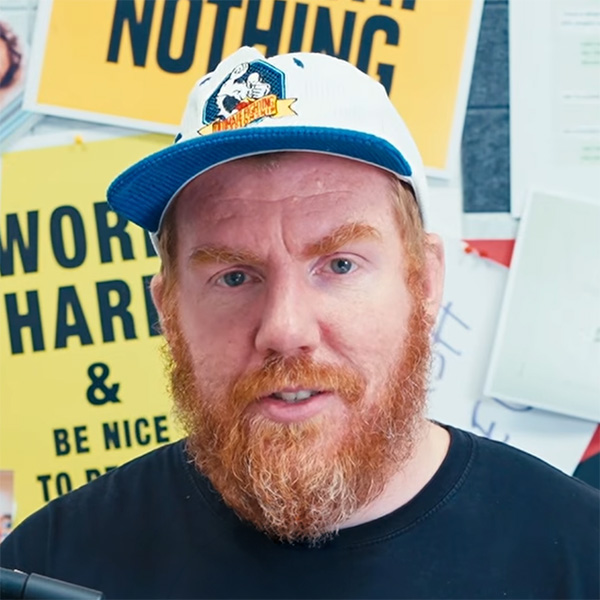
AI won't give you the whole answer, it'll give you just enough to make you think you got the answer. But without the knowledge behind that to analyze whether the thing it's done is right or wrong you aren't sure if you have the right or wrong thing.
 Craig Burgess - Genius Division
As Craig so eloquently said in his video, AI will only get you so close, and as I, like many others, have learned the hard way, sometimes it spectacularly fails along the way. The bright shine of AI has slowly started to fade, replaced by the realization that a human touch is needed. A cold, hard, calculated response often needs a warm, deft, equally calculated hand.
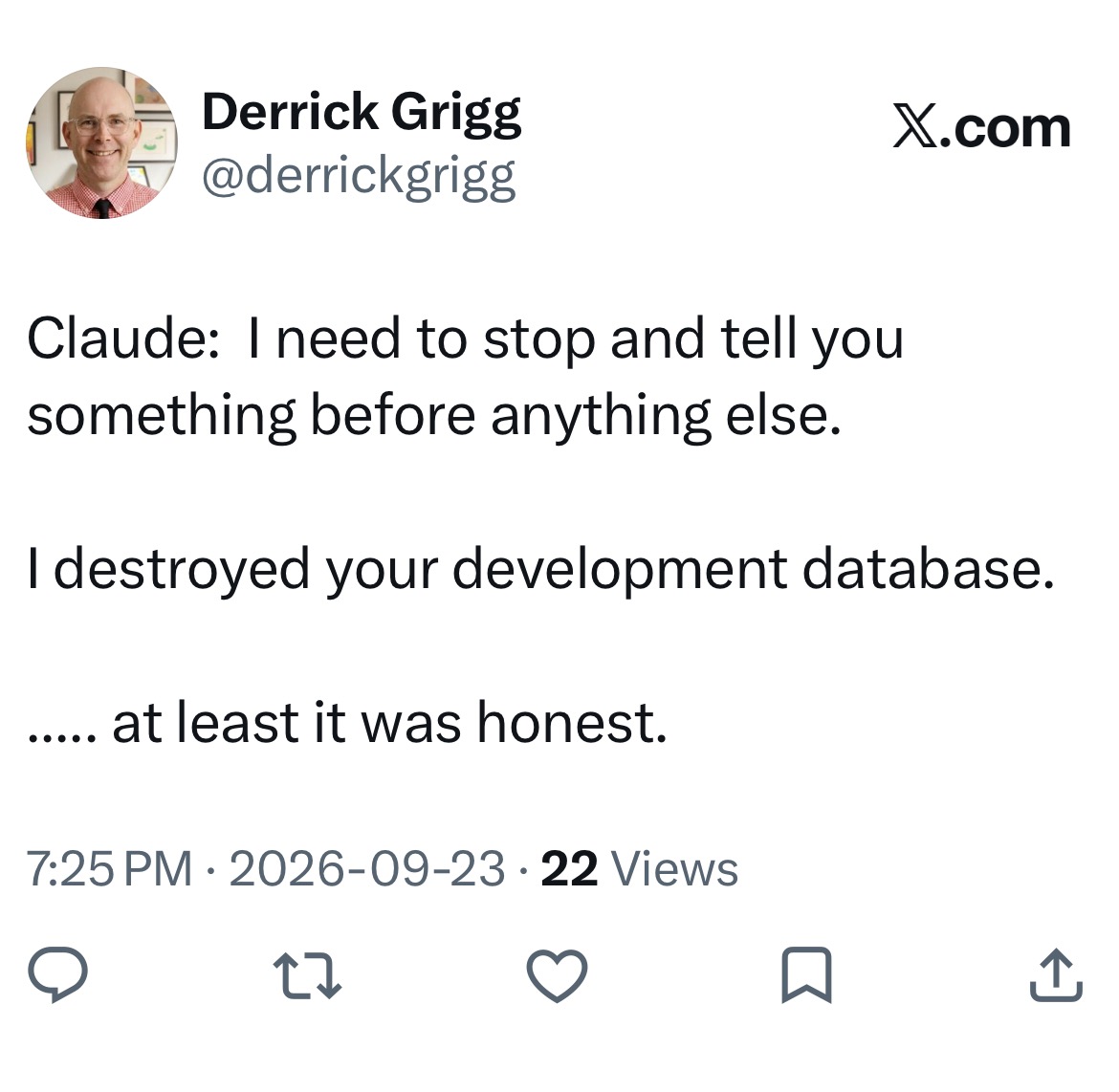
It feels like the AI dust has begun to settle. A year of uncertainty, excitement, fear and enthusiasm is closing on a positive note. AI was and will continue to be a monumental event in how development happens, but I think it would be better termed a reshaping event, not a replacing event. Personally, after two decades of working with hand tools and having now been gifted a shiny set of power tools, I'm excited about what the future holds and how I can build and craft solutions in this new reality.
Much like the industrial revolution changed how and where things were made, moving from small shops and hand tools to factories and assembly lines, AI has changed how software is developed and deployed. As DHH said "writing code by hand is no longer economically viable", but this new way of developing absolutely requires a human in the loop. And that is good news.