An explainer
The most likely next word.
WebBot 9000 is back. This time we’re looking under the hood to see how AI really works.
✦ WebBot 9000online
Hi! I’m WebBot 9000. ✨ I can write anything!
Write me something original.
Absolutely! ✨ Once upon a time, in a world not so different from our own…
The most likely opening line in the history of stories.
Quick test
Thequickbrownfoxfox
You thought “fox.” You didn’t decide to. You just knew.
You’ve seen that sentence enough times that the ending arrives on its own. That’s the whole trick behind AI. It just does it at a scale no human could.
Under the hood
One word at a time.
- 1Words become numbers
AI can’t read. Every word, or piece of a word, is turned into a long list of numbers.
- 2Numbers become relationships
Words used in similar ways end up with similar numbers. That’s how it “knows” king is to queen as man is to woman. It never learned what a king is, only where the word sits.
- 3Relationships become odds
Given everything so far, it scores every possible next word.
- 4Pick one and repeat
It picks a word, adds it to the sentence and starts again. An essay, a poem or a whole website is just that loop, run thousands of times.
king − man + woman ≈ queen
The quick brown ▍
- fox92%
- dog3%
- cat1%
- spreadsheet0.001%
Loop
Thequickbrownfoxjumpsoverthelazydog.
The odds here are for illustration. Real models weigh tens of thousands of possible words at every step.
The “creative” setting
Creativity is a dial.
AI has a setting called temperature. Turn it down and it always picks the likeliest word. Turn it up and it takes chances.
✦ WebBot 9000Temperature
Write a line for my bakery’s website.
Low · 0.2Fresh baked goods made with love in the heart of downtown.
Medium · 0.8Warm cookies, early mornings and the best smell on Main Street.
High · 1.9Croissant thunder unfolds the butter of Tuesday’s moon.
Turn it down and you get beige. Turn it up and you get nonsense. Nowhere on the dial does it mean anything.
That’s not intent. It’s randomness with a volume knob.
Training
It read the whole internet.
Billions of pages: books, forums, recipes, code, reviews, arguments in comment sections. It learned how all of it fits together.
✦ WebBot 9000
 The web developer
Read 10,000 articles on client communication
Took the 9 pm call when the site went down
Knows 4,000 ways to say “launch day”
Remembers every launch that went sideways
Has seen every bakery website ever made
Asked the baker who actually sells her cookies
Learned from everyone’s mistakes, on paper
Learned from real ones, the hard way
It has read about everything. It has lived through nothing.
Brown butter cookies
- 1 cup butter, browned
- 1¼ cups brown sugar
- 2 eggs
- 2¼ cups flour
- Chocolate, chopped
Seen 40,000 times
Taste
It knows the recipe. It’s never tasted the cookie.
It can tell you that brown butter makes a cookie nuttier. It has no idea whether that’s good. It has never burned a batch, never watched a customer’s face, never thought “something’s off” and known why.
Taste isn’t knowing what’s likely. It’s knowing when the likely answer is the wrong one.
What that looks like
Make me a bakery website.
BakeryGet started
Every bakery website, averaged
The average of everything is nothing in particular.
When the goal is the most likely answer, you get what everyone else already has. Standing out takes something AI can’t predict: the one detail that’s true about you.
The other half of the problem
AI gives you exactly what you ask for.
That sounds like a feature. It’s actually the catch.
It never asks why. It never says no.
A prompt is only as good as the person typing it. If you don’t know what your website needs, AI won’t either. It will just agree with you, quickly and confidently.
✦ WebBot 9000online
Make my website pop. Add a slider. Maybe a video? And make the logo bigger.
Great idea! ✨ Here’s your website with a slider, a video and a bigger logo!
SWEET
BLISS
“Some people say, ‘Give the customers what they want.’ But that’s not my approach. Our job is to figure out what they’re going to want before they do…
People don’t know what they want until you show it to them.”
AI is built to give you what you asked for. A good designer or developer is there to work out what you need, even when that’s different.
The human in the loop
Same request. Different hats.
- The Coach
- The Painter
- The Detective
- The Keynote
The request“We need more traffic.”
✦ WebBot 90003 seconds
On it! ✨ Here are 40 blog posts about cookies.
- 10 Reasons Cookies Are Delicious
- The Ultimate Guide to Cookies
- Cookies: A Deep Dive
- Why Cookies Matter in 2027
- + 36 more
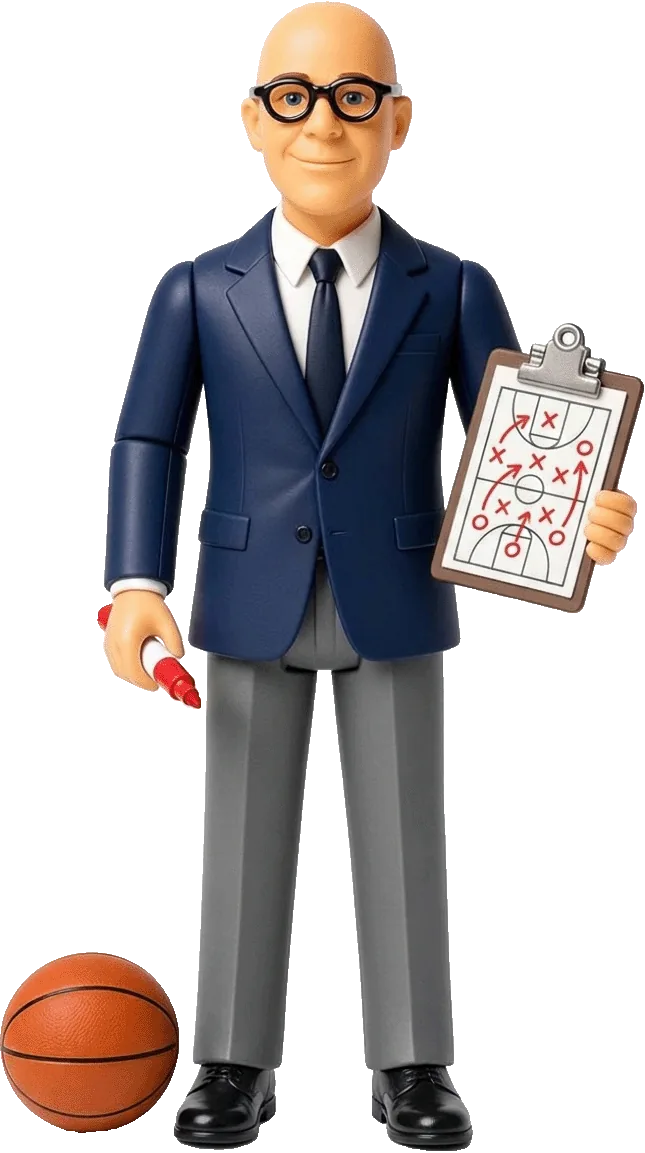
The CoachBetter shots, not more shots
More shots won’t win it. Better ones will. You don’t need more visitors. You need the ones you have to order. Let’s make ordering the easiest play on the page.
“Don’t mistake activity for achievement.”John Wooden
The request“Make it look nice.”
✦ WebBot 90003 seconds
Done! ✨ I made it look nice.
BakeryGet started

The PainterHas taste
One big photo of your real cookies, room to breathe, and your hand-drawn logo, kept just as it is.
“We don’t make mistakes, just happy little accidents.”Bob Ross
The request“Online orders dropped a lot this month. I think we should redesign the checkout page.”
✦ WebBot 90003 seconds
Great call! ✨ Here’s a brand new checkout page!
[Your Bakery Name]Get started
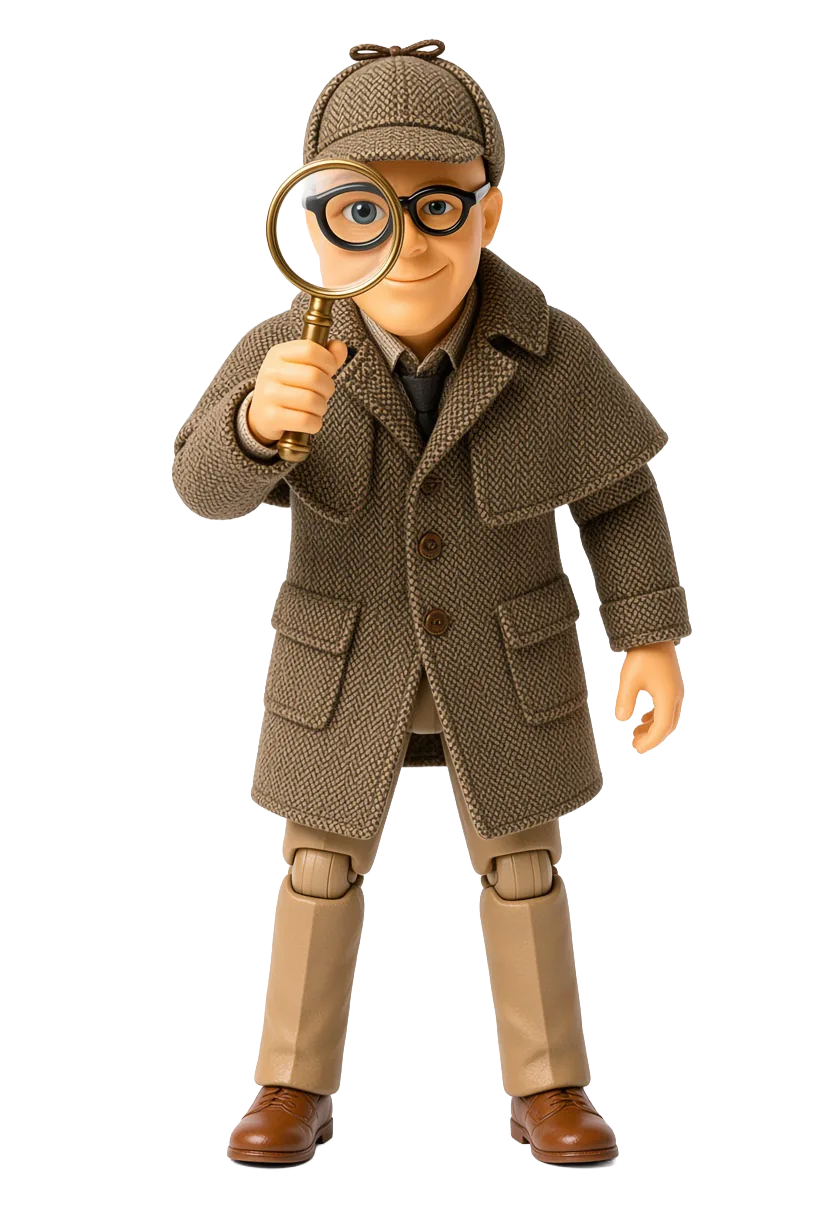
The DetectiveFollows the evidence
I dug into your analytics first. Checkout is fine: people who reach it still buy. Desktop orders are steady, but phone orders fell 62% the week your menu became a PDF. Fix the menu, not the checkout.
Online orders, by week
Desktop
Phone
“It is a capital mistake to theorize before one has data.”Sherlock Holmes, A Scandal in Bohemia
The request“Autoplay video, a slider with eight offers, and make the logo bigger.”
✦ WebBot 90003 seconds
Love it! ✨ All three!
SWEET
BLISS
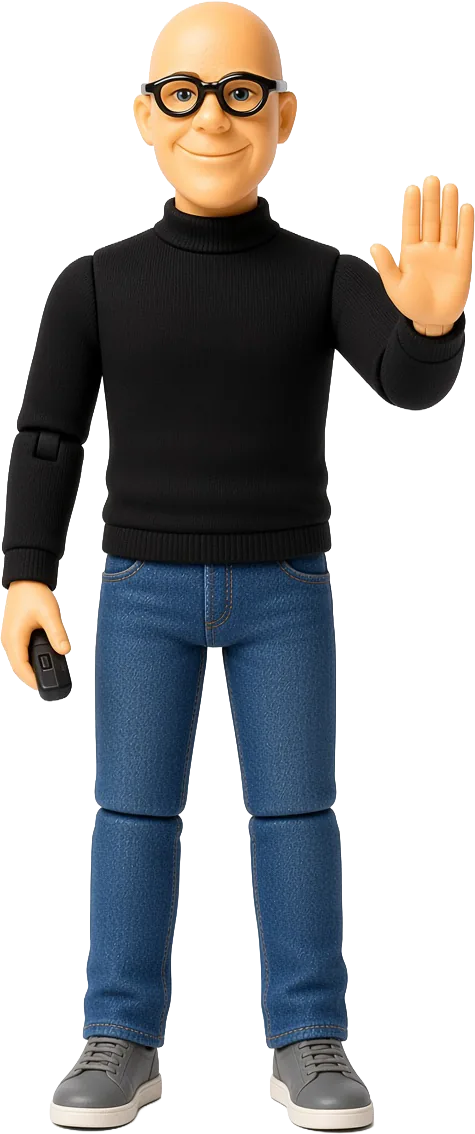
The KeynoteSays no
No. One photo, one offer, one big Order button.
“Focusing is about saying no.”Steve Jobs
To be fair
It’s a great tool.
I use AI every day. It’s very good at a lot of things.
What it’s great at
What still takes a human
First drafts
Knowing which draft is right
Boilerplate code
Deciding what to build
Summarizing and searching
Telling you when you’re wrong
Quickly trying ten versions
Picking the one that fits you
Never getting tired
Caring how it turns out
I’m great at first drafts. ✨ Knowing which one is right? That’s on you.
A power tool, not the carpenter.
AI predicts what comes next.
People decide what should.
Your business isn’t the average of every business like it. Your website shouldn’t be either. I use AI to work faster. I use 20 years of experience, good questions and the occasional “no” to get it right.
✦ WebBot 9000online
Thanks. I’ll take it from here.
Sounds good! ✨